
Search engines have always read robots.txt to learn what they may crawl. A new standard,
llms.txt, gives AI tools a short guide to what your site is about. Bloomlight ships a free
llms.txt builder and a structured data generator, so machines describe your business the way you would.
Check your robots.txt
A missing robots.txt is survivable; a wrong one makes you invisible. The classic accident is a
leftover Disallow: / from a site rebuild, quietly telling every crawler to stay away. Your audits
flag crawlability problems as findings, so if something is blocking discovery you'll see it called out on the
affected pages.
Publish an llms.txt
llms.txt is a short, plain-text summary of your site for AI tools. None of the big assistants has
said it reads one yet, so it's an inexpensive bet. See
What is llms.txt?
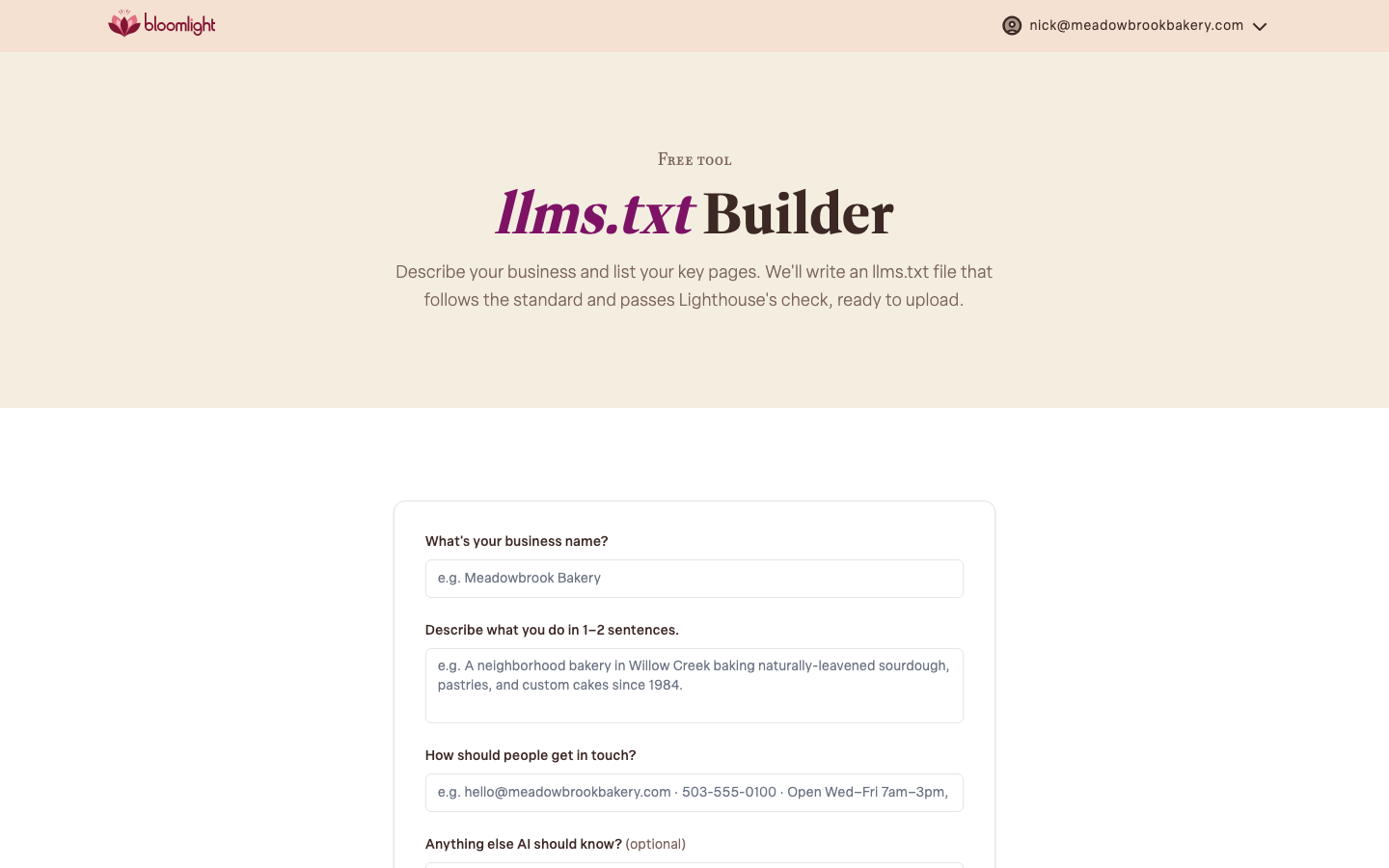
for the details. The llms.txt builder
walks you through it: describe what you do, list your key pages, and download a file ready to upload to your
site root.
Add structured data
Structured data (Schema.org markup) tells search engines your hours, location, and offerings in a format they trust, and it powers the rich results beside your name. The schema generator builds the snippet for your business type; paste it into your site's head and you're done.
How you'll know it's working
Watch your SEO score and findings after the changes land: crawlability findings resolve, and the score reflects it. Visibility compounds slowly, so give search engines a few weeks to re-crawl and re-rank.